European Court Delivers Landmark Climate-Change Decisions: An Access to Justice Perspective (part I)


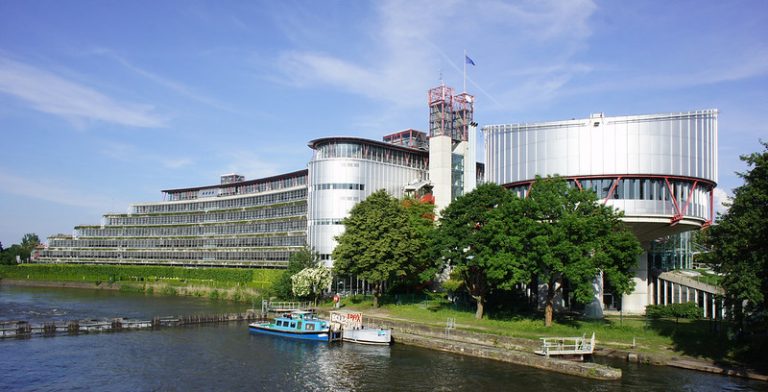
Last week a historic moment in climate and human rights litigation occurred when the European Court of Human Rights (ECtHR) addressed the issue of climate change and its effects on rights protected under the European Convention on Human Rights (ECHR). On the 9th April 2024 the Strasbourg Court, delivered three widely-anticipated judgments. This post serves as the first of two addressing the implications of these cases in relation to human rights and climate litigation. While the first reviewed the outcome of these cases, the second will be released shortly and focus on the issues related to access to justice in the context of climate litigation.
While only one of the three cases seen was deemed admissible, the ECtHR’s decision in that case will have far-reaching consequences. In this case, Verein KlimaSeniorinnen Schweiz and others v. Switzerland, the ECtHR determined that States’ human rights obligations include the control and mitigation of their greenhouse gas (GHG) emissions.
The case involves a complaint by a Swiss climate association and its members, a group of older women concerned about the consequences of global warming on their living conditions and health. They claimed that the actions taken by the Swiss government to mitigate climate change are insufficient, and that this constitutes a violation of their rights under the ECHR.
The ECtHR delivered a long and sophisticated judgment, in which it found that the respect for private and family life under Article 8 includes an obligation to mitigate climate change. Although an eye-catching finding, it has been argued that the Court is holding States to a rather minimal standard in terms of assessing their actions to reduce GHG emissions: in effect, the ECtHR did not evaluate the results of the actions taken by Switzerland, but only the existence of an adequate regulatory framework for reducing GHG emissions.
Nevertheless, the significance of the Judgment can hardly be overstated. The Court found that Switzerland had failed to meet these standards, as there were “critical lacunae” in the process of putting in place such a regulatory framework, including a failure “to quantify, through a carbon budget or otherwise, national GHG emissions limitations” (para. 573). These very relevant findings will have considerable impact well beyond the case at hand